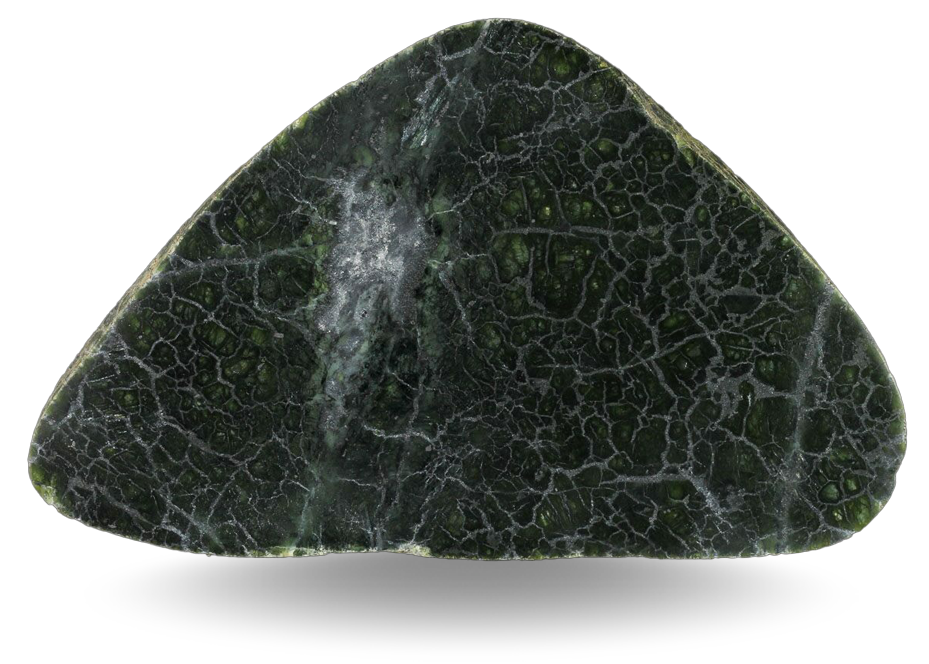
Olivine is the general name for a mineralogically isomorphic series and constitutes the primary component of the Earth's upper mantle. In the commercial and industrial ecosystem, the term 'Olivine' usually refers to rocks rich in Forsterite (Mg2SiO4), the magnesium-rich end-member. Its high refractoriness and chemical stability have placed this mineral at the center of modern metallurgy and environmental engineering.
Mineralogical Structure and Crystallography
Olivine group minerals are nesosilicates that crystallize in an orthophosphate structure. The crystal structure consists of isolated [SiO4]4- tetrahedra linked by Mg2+ and Fe2+ cations.
Solid Solution Series: Industrial-grade olivine should have a high Forsterite (Fo) content (85% - 94%) within the continuity between Forsterite and Fayalite (Fa).
Crystal System: Orthorhombic.
Cleavage: Usually poor or absent this allows grains to remain in an angular/sub-angular form during crushing and grinding, increasing abrasive efficiency.
| Property | Value / Description |
| Melting Point | = 1760°C (Depending on high MgO content) |
| Specific Heat Capacity | 0.80 - 1.05 kJ/kg·K (Variable with temperature increase) |
| Thermal Expansion | Linear and low approximately 1.1% in the 20-1000°C range. |
| Sintering Start | 1450°C - 1500°C |
| Chemical Character | Basic/Neutral |
Metallurgical and Industrial Application Analysis
In the world of industrial minerals, olivine is a strategic raw material thanks to its high melting point (1760°C) and low thermal expansion coefficient. However, to obtain maximum performance from olivine, the particle size distribution (granulometry) must be selected according to the intended application. Choosing the wrong size can lead to many technical problems, from casting defects to refractory cracking.
1. Refractory and Fire Brick Production (Refractory Brick Production)
In the refractory industry, olivine is the main component of basic refractory bricks, especially forsterite bricks. In brick production, achieving a dense, void-free structure requires blending different size fractions in specific proportions.
Coarse Aggregate (2.0 - 5.0 mm): Forms the mechanical skeleton of the brick and improves volumetric stability.
Medium Aggregate (0.5 - 2.0 mm): Fills the voids between coarse grains and increases the bulk density of the brick.
Fine Filler and Binder (0 - 0.5 mm / Micronized): Forms the matrix structure and promotes grain bonding (sintering) during firing.
2. Steel and Metallurgical Industry (Slag Conditioning & EAF)
EAF Taphole Sand (1.0 - 6.0 mm): Used in the tap holes of electric arc furnaces to withstand the weight of molten metal.
Slag Conditioner (0 - 6 mm): Provides homogeneous distribution inside the furnace and supports rapid reaction balance.
3. Foundry Industry (Foundry Grades)
In foundry applications, particle sizes are classified according to AFS standards:
Fine (AFS 60-90): For small castings requiring high surface precision.
Standard (AFS 45-55): For general casting applications.
Coarse (AFS 30-40): For heavy castings and applications requiring high gas permeability.
4. Surface Preparation and Abrasive Blasting (Abrasive Blasting)
0.1 - 0.6 mm: For delicate cleaning and fine surface profiling.
0.2 - 1.0 mm: For standard rust and paint removal.
0.5 - 2.0 mm: For heavy corrosion and thick coating removal.